API Versioning Strategies That Prevent Breaking Changes
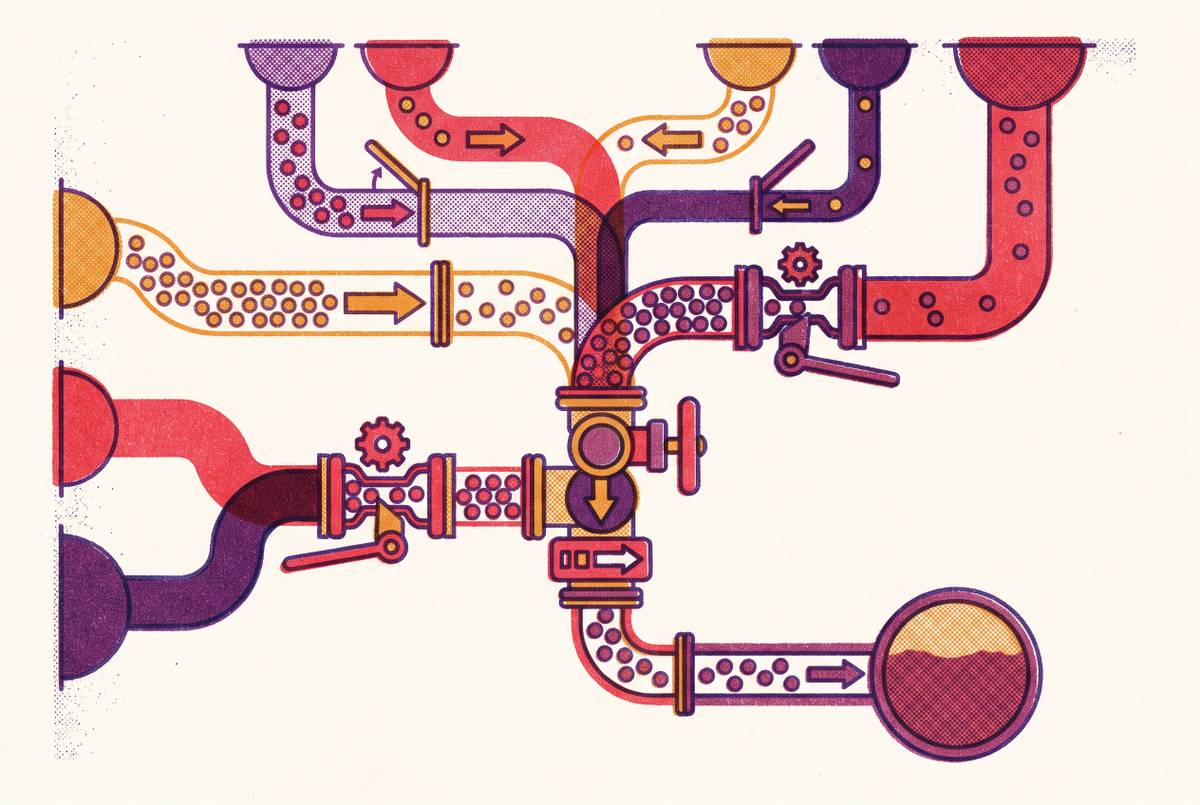
Quiet changes like type shifts and validation tightening break APIs more often than removals do.
Breaking changes in APIs rarely look the way you expect. Most engineers picture a dramatic removal. A field disappears. An endpoint goes dark. The client explodes. But the reality is that the changes that actually break consumers are much quieter than that.
Here are some examples of changes teams ship all the time, without a version gate, that still fracture dependent clients:
- Narrowing an enum. Valid values disappear. Clients that were passing those values now fail validation.
- Tightening field validation. A field that used to accept loose input now rejects it. No rename, no removal. Just stricter rules.
- Changing a field type. String
"1"becomes integer1. The value looks the same. The client disagrees. - Making an optional parameter required. No announcement. Existing calls that omit it now fail.
- Adding a required field to a request body. Existing POST requests are suddenly malformed.
There is also one that trips people up because it feels safe: adding a new field to a response. Clients that cache responses and deserialize strictly can break on an unexpected key they do not know how to handle. The "safe" change is not always safe.
The blast radius is also bigger than the API boundary suggests. API changes propagate through client codebases via inheritance and dependency injection. One upstream change ripples silently through three layers of code before anything visibly breaks. And here is the uncomfortable context: a substantial share of minor and patch releases in widely-used package ecosystems contain at least one breaking change, meaning even a version label you trust is not always a reliable signal.
What this means in practice is that preventing breaking changes starts before you pick a versioning scheme. It starts with a shared, written definition of what "breaking" actually means for your API's consumers. Without that, every versioning strategy in the world is just syntax.
The Taxonomy Every Team Needs Before Choosing a Versioning Strategy
Before you decide how to version, you need to decide what counts as a version-triggering change. Two categories, defined practically:
Non-breaking. Safe to ship in-place:
- Adding a new endpoint
- Adding an optional request parameter or header
- Adding a new field to a response
- Adding a new response header
- Relaxing a constraint (making a required parameter optional)
- Adding new enum values (with a caveat below)
Breaking. Requires a version gate:
- Removing or renaming an endpoint, field, or parameter
- Changing a field's type
- Making an optional parameter required
- Restructuring the response shape
- Removing enum values
The caveat on enum additions is worth holding onto. Adding new enum values is non-breaking for the producer but can break consumers who switch exhaustively over every possible value. If your consumers pattern-match on enums without a default case, a new value is a runtime error waiting to happen. Document this in your API contract explicitly.
The practical implication here is that this taxonomy should live in a team's API governance checklist, reviewed before every release. Not reconstructed from memory mid-PR. The taxonomy is also what makes every strategy in the following sections meaningful. A versioning method is only as useful as your team's ability to recognize when it needs to be invoked in the first place.
URI Path Versioning: Why Most Public APIs Start Here
The mechanic is simple. The version lives in the path. /v1/users. /v2/users. Each version is a distinct, addressable resource.
Stripe uses it. Google Cloud uses it. A lot of large public APIs reach for this first, and the reasons are pretty obvious once you work with APIs at scale.
Why teams start here:
- The version is impossible to miss. It shows up in every log line, every curl command, every support ticket.
- It is browser-testable. Paste the URL, inspect the response. No tooling required.
- Routing is trivial. Gateways, load balancers, and service meshes can route by path prefix without parsing headers.
- Caching is unambiguous. Each version has a distinct URI, so CDNs and proxies handle it correctly without extra configuration.
That is a real list of real advantages. But the tradeoffs are also real.
What URI versioning costs you:
- It violates HATEOAS. Stable resource identity is a REST principle, and versioned URIs mean the same resource has different addresses over time.
- Clients with hardcoded URIs must update them on every major bump.
- Version proliferation is structural. Teams that gate every small breaking change on a new path end up maintaining
/v1,/v2,/v3,/v4simultaneously. That is not a discipline problem. That is an architectural pressure built into the approach. - A new major version often means branching an entire API surface, not just the changed endpoints. The maintenance burden compounds over time.
GitHub, by contrast, uses header-based versioning. That choice is not arbitrary. It reflects a different set of priorities about URL stability and consumer control. Worth knowing that the largest players do not all land in the same place.
The version proliferation problem is the one that pushes teams toward the strategies below. URI versioning is a great starting point. It is rarely the complete answer.
Header and Query Parameter Versioning: When URL Cleanliness Is Worth the Tradeoff
Header versioning. The version travels in a custom request header. Something like Api-Version: 2. The server reads it and dispatches to the right handler. The URL never changes.
What you gain:
- URLs stay stable. The same URI always refers to the same resource, regardless of version.
- You can do granular per-consumer upgrades without touching URL routing.
- It aligns with HTTP's negotiation model more cleanly than path versioning does.
What you give up:
- The version is invisible. It does not appear in logs, browser bars, or basic tooling. Debugging gets harder.
- Caching requires explicit handling. You must set
Vary: Api-Versionor caches will serve the wrong response to the wrong consumer. That is a real gotcha. - You cannot test it by pasting a URL. You need a client that can set custom headers.
- External developers unfamiliar with the header contract will have more friction getting started.
Header versioning fits best where you control all the consumers. Internal APIs. Microservice-to-microservice communication. The invisibility that is a liability in a public API is a non-issue when you own every caller.
Query parameter versioning. Version as a query param. ?version=1. Easy to implement. Simple to pass in any HTTP client.
What you gain: Low friction for quick internal APIs. Can default to latest when the param is absent.
What you give up:
- Query params are semantically for filtering, sorting, and pagination. Putting a version there muddies the contract.
- The caching complications parallel those of header versioning.
- Defaulting to latest-when-absent can silently break a client that omits the param after an upgrade. Silent breakage is the worst kind.
Query parameter versioning is rarely the right primary choice for a stable public API. It earns its place for rapid-iteration internal tooling where developer convenience is the priority and strict contract clarity is not.
Media Type Versioning and Why So Few Teams Actually Ship It
The mechanic: the version lives in the Accept header as a custom media type. Something like Accept: application/vnd.acme.v2+json. The server content-negotiates the right representation.
The theoretical case is genuinely strong:
- Fully aligned with HTTP content negotiation as designed.
- URLs stay completely clean. The resource URI is genuinely stable.
- You can version individual representations independently, not the entire API surface.
Why adoption stays low in practice:
- Custom media types confuse most HTTP tooling. Debuggers, proxies, and API testing tools do not handle them gracefully.
- Clients must construct precise, correctly formatted
Acceptheaders. Easy to get wrong. Hard to debug when they do. - The documentation burden is significantly higher than URI versioning.
- Most developers are simply unfamiliar with the pattern. The onboarding cost is real and ongoing.
Honest verdict: media type versioning is theoretically correct and practically rare. You will see it in large-scale public APIs or hypermedia-first projects where the team has already committed to full REST compliance. For most teams, the gap between correctness and adoption is wide.
That gap is useful signal. The best versioning strategy is not the most academically correct one. It is the one a team can consistently apply and consumers can consistently use. Which is exactly why hybrid models exist.
Combining Strategies: When a Hybrid Model Earns Its Complexity
The core hybrid pattern: major version in the URI path (/v1, /v2) for coarse structural changes, and headers for representational or behavioral variation within a major version.
What this buys you in practice:
- URI routing stays simple for gateways and infrastructure teams.
- Within a major version, individual consumers can opt into feature-level behavior changes via header without a path bump.
- It reduces pressure to increment the major version for every small breaking change, which slows version proliferation.
Context-fit guidance:
- Public APIs with a broad external developer base: URI versioning as the primary axis, with evolution (additive changes in-place) handling most updates.
- Enterprise APIs with long-lived contracts: URI versioning plus explicit, long deprecation windows.
- Internal microservices: Header versioning, where URL stability is genuinely valued and all consumers are known.
The hybrid model works when the team has written down which axis handles which kind of change. It breaks down when the rules are implicit and different engineers apply them differently. That is not a warning about complexity. It is a warning about governance.
The value of any hybrid approach is in the decision rules, not the combination itself. A documented policy prevents version proliferation from simply recurring at both axes simultaneously, which is exactly as bad as it sounds.
API Evolution as a Strategy: Deferring the Version Bump by Design
Evolution means the API absorbs most changes additively, and a new version number is reserved for genuinely unavoidable breaking restructures. It is not a workaround. It is a discipline.
What evolution looks like in practice:
- New endpoints for new behaviors, rather than modifying existing ones.
- Optional parameters added to existing endpoints.
- Response fields added, with consumer guidance on tolerant parsing.
- Behavioral changes surfaced as opt-in flags, not silent defaults.
Stripe is the clearest real-world example. For most changes, they add optional parameters and new endpoints without a version bump. Full version releases are reserved for significant architectural breaks. The result is that most consumers are unaffected by most changes. That is not an accident. It is an explicit design goal.
When breaking changes do accumulate, the right move is to bundle them into a single major release rather than issuing many small version bumps. Consumers have to migrate either way. Fewer migrations that are each more substantive is better than many small ones that each require attention and testing.
There is also a consumer-side pattern worth documenting: the tolerant reader. Consumers designed to ignore unknown fields and pass through unrecognized values are more resilient to additive changes. This is a consumer contract concern, and your API guides should say so explicitly.
Evolution is not a substitute for versioning. It is a way to reduce how often versioning is needed, so that when you do bump a version, it actually means something.
Date-Based Versioning: What Stripe's Model Actually Requires to Work
The mechanic: each account is pinned to the API version, identified by date, that was current when they integrated. New accounts default to the latest date. Existing accounts keep working unchanged until they explicitly upgrade. No one is silently migrated.
This solves something URI major versioning does not. Consumers are never moved to a new version by someone else's release schedule. Your integration does not break because another team shipped.
How Stripe actually makes this work internally: The server generates the response using the latest schema, then applies transformation modules in reverse chronological order until the output matches what the pinned version expects. Backward compatibility is maintained algorithmically. They are not running parallel codebases.
What this costs. Stripe acknowledges it openly. Maintaining over a decade of backward compatibility means every new version adds transformation code. Over time, version-check logic accumulates throughout the codebase. It gets slower to reason about. That is a deliberate engineering tradeoff, not a solved problem.
For a different cadence, SailPoint's annual calendar-versioned model is worth knowing. A new named version each year. Experimental releases accompany the annual release when breaking changes are introduced. Versions older than three years may remain operational but lose active support. Lower complexity. Appropriate for APIs that change more slowly.
CalVer versus SemVer as a labeling question: Date-based versions communicate when a version was cut. They do not communicate what kind of change it represents. Consumers cannot tell from the date whether an upgrade is safe or breaking without reading the changelog. SemVer encodes severity in the number itself, which is a real readability advantage for consumer-side decision-making. Neither is wrong. They answer different questions.
The honest takeaway: Stripe's model is the gold standard for consumer safety. It is also expensive to maintain at scale. Adopt the principles first. Pin consumers to versions. Make upgrades opt-in. Never silently migrate anyone. The full implementation can come later, once the discipline is established.
Deprecation as a Consumer Protection Mechanism, Not an Afterthought
The framing shift matters here. Deprecation is not an announcement that a version is going away. It is the active period during which consumers have a clear runway to migrate. Those are different things, and treating them the same is how teams strand clients on dead versions.
The IETF Deprecation header (RFC 9745) gives teams a standardized, machine-readable way to communicate this. Set Deprecation: true and pair it with a Sunset header carrying the exact date the version stops responding. Clients and tooling that know to look for it get the signal automatically. No hunting through changelogs.
What a deprecation policy should actually include:
- A published sunset date with enough runway. The right amount of runway depends on your consumer base. External public APIs typically need months. Internal services might need weeks. Enterprise contracts sometimes need years.
- Version-specific migration guides, not generic release notes.
- Response headers on every deprecated call, so consumers who are still hitting old endpoints get the reminder on every request.
- Proactive outreach for consumers you can identify. Do not wait for them to find the changelog.
The deprecation lifecycle, concretely:
- Announce the deprecation with a clear sunset date.
- Set the
DeprecationandSunsetheaders immediately. - Monitor traffic to deprecated endpoints. Know who is still using them.
- Reach out to active consumers before the deadline.
- Sunset the version on the announced date. Then actually do it.
That last step matters. Teams that announce sunsets and then quietly extend them are training their consumers to ignore deprecation notices. If you say a version goes dark on a date, it goes dark on that date. Your credibility as an API provider depends on it.
Deprecation done well is not overhead. It is consumer protection. It is also the mechanism that makes version proliferation sustainable, because without it, old versions never actually die.