HRIS Integration Complexity and Compliance Considerations
Disconnected HR systems create ongoing compliance and data alignment risks.
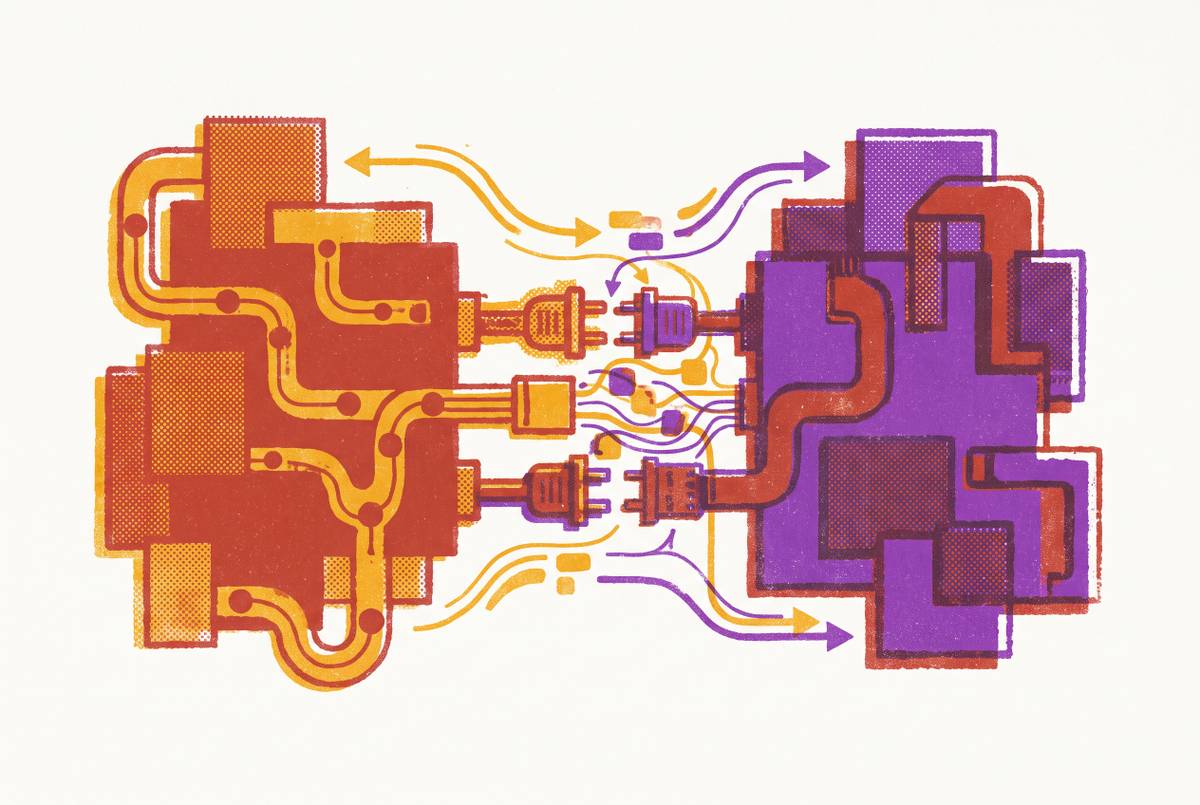
HRIS integration complexity and compliance are parts of the same architectural problem. Systems built on their own have different APIs, are owned by different teams, and move employee data under rules that change from one jurisdiction to another. Reliable integrations take those differences into account for as long as they run.
Why HRIS integration complexity is structural, not incidental
Enterprise HR systems evolved separately, with their own data models, authentication schemes, and ways of exposing information. Payroll, benefits, attendance, recruiting, and compliance platforms often arrived at different times under different owners. Their independence is built into the stack. Connecting them requires field mappings and agreement between systems that were never designed to share one view of an employee.
That history explains how a promotion can appear in the HRIS without reaching payroll, or a termination can leave active records in three downstream systems. Each platform has its own version of what happened. Integration is supposed to reconcile those versions, but the connection creates another place where things can go wrong. Authentication can drift, schemas can diverge, and rate-limit behavior can change after the initial implementation works.
Every additional system therefore adds more than another destination for data. It introduces another set of assumptions that the integration must keep aligned with the rest. Better configuration helps, but cannot remove those differences. Blaming only the vendor or the implementation team treats a problem with how the stack is built as one team’s mistake, rather like blaming the last plumber for a building with six incompatible pipe sizes.
API heterogeneity as the technical root of integration instability
The API layer turns those inherited differences into engineering work. Providers vary in authentication, pagination, rate limits, and write behavior, so a pattern that works for one does not automatically fit another. Even the same provider can differ across tenants. Customer configuration shapes the data that an integration must interpret.
Enterprise systems including Workday, SAP SuccessFactors, UKG Pro, and Oracle HCM expose OData/REST-based or heavily permissioned APIs with complex, tenant-shaped data models. Advanced authentication flows and nested objects complicate access and mapping. Mid-market providers including BambooHR, HiBob, Paylocity, Paycom, Personio, and Namely offer more predictable REST schemas, but customer-specific fields still introduce variation.
SMB and payroll-first providers including Gusto, Rippling, Justworks, Paychex, ADP, and TriNet span a wide range of API maturity. Across that group, integration options range from documented REST APIs to file exports and restricted partner access. The constraints require different fallback approaches. Limited endpoints and reduced write capabilities cannot be treated as interchangeable with a full API.
BambooHR’s API documentation specifies a 400-field limit per employee record request. BambooHR also changed its rate-limit response code from 503 to 429 with advance notice, while leaving the actual call limits unchanged. Gusto enforces rate limits too, but that alone does not show that providers behave the same way.
Authentication adds a quieter failure path when OAuth tokens expire and refresh attempts fail. Data can stop flowing before anyone notices, so token management and monitoring are needed from the start. Writing data back raises the difficulty again. Payroll deductions and benefits elections require the integration to respect write sequencing and validation rules.
Why data quality problems don't stay in the HRIS
Inaccurate records, inconsistent employee identifiers, and mismatched classifications propagate across the API boundary into connected platforms. Connectivity is not a data quality filter.
Formatting differences make that problem more than a question of spelling. Employee identifiers, date formats, organizational hierarchies, and job codes shape how systems read records. Inconsistent formats can cause failures more often than connectivity itself. When two systems disagree about what a field means, moving its value successfully does not establish agreement.
Benefits administration makes the consequences painfully concrete. Failed enrollment syncs can leave employees in the wrong plan or without coverage, while mismatched dependent data can create coverage gaps and COBRA compliance issues. Missing benefits elections can also lead to wrong payroll deductions. These are downstream effects of broken data alignment that also create extra administrative work for HR.
Before fields start moving through the stack, a data dictionary needs to state each field’s source system, how often it is updated, and which validation rules it must meet. Otherwise, automation gives bad data a company-wide travel pass, and the cleanup follows it from platform to platform.
Fragmented system ownership and what it does to integration maintenance
Maintenance is harder when no single team owns the whole path from the source record to what happens downstream. Each owner may know its own platform without seeing how a change upstream affects other systems. The gaps sit between those responsibilities. A local update can therefore become an integration problem before the people responsible for the receiving system recognize it.
Workday’s bi-annual updates can introduce deprecations and schema changes that become breaking API changes. Changes to authentication, required fields, and endpoint structures also keep creating engineering work in the systems downstream. The work does not end at launch. A Workday integration can take one to three months to build, while a standard Workday implementation averages 6–12 months from kickoff to go-live, and those are distinct scopes.
As the stack grows, potential point-to-point connections grow faster than the system count. Each new platform adds links to maintain, so keeping them in line by hand gets harder without a unifying data layer. Maintenance consumes capacity that could otherwise support product development. The integration budget has a subscription fee, even when nobody sells it as one.
That ongoing cost makes the choice to build versus buy a trade-off in how the stack is built. Unified APIs can reduce maintenance overhead for read-heavy workflows and consistent schemas, but may not accommodate tenant-specific fields or advanced write operations. Custom work preserves more room for those requirements. Neither choice eliminates ownership, and the right balance depends on the depth of integration customers actually need.
How compliance obligations layer onto an already unstable integration architecture
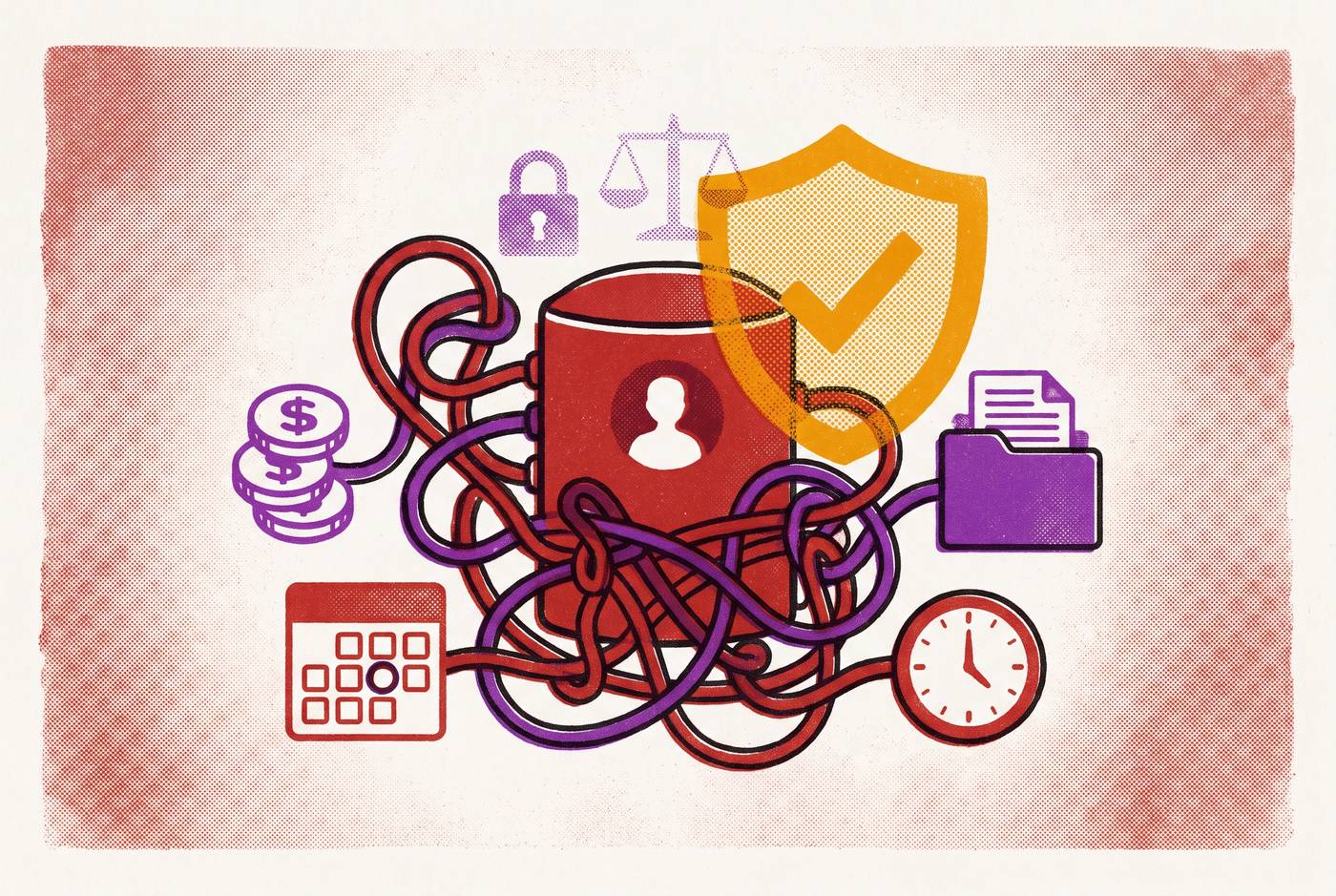
Compliance turns synchronization failures into more than operational inconvenience. A delay acceptable for a performance-data sync can be unacceptable during offboarding, when employment status must propagate immediately across connected systems. Continued benefits coverage for former employees can create financial and legal exposure. The same technical delay has different consequences depending on the workflow it interrupts.
A GDPR right-to-be-forgotten request requires coordinated handling across connected platforms, with verification that applicable deletion obligations have been completed throughout the stack. Deleting the primary record is not enough. The architecture must support the request wherever the employee’s data has gone.
HIPAA also sets rules for protected health information across the data chain. Vendors that handle that information generally need a Business Associate Agreement, with a few exceptions that include certain treatment disclosures, conduit entities, and public benefit program disclosures. Evaluation cannot stop at the primary HRIS vendor. Each system’s role in the data chain determines what needs review.
SOC 2 Type II is more useful for evaluating ongoing control effectiveness than Type I because Type II covers an audit period and Type I covers a single point in time. Integrations need that longer view. Operations in Europe also need encryption and strict access-control for file storage, care when handling cross-border transfers, and compliance with each country’s social declaration rules. German works councils may prohibit transfers that are standard practice in the US.
Those differences limit what a single global configuration can accomplish. A local system that works within one country may fail to support expansion across borders. Global HRIS platforms therefore need connections that can adapt to local payroll engines. Centralized records do not erase local obligations, and a shared employee schema is not a shared legal jurisdiction.
Why compliance automation creates its own blind spot
Automation appears to offer a natural answer to this regulatory complexity. HRIS platforms encode labour-law rules, payroll calculations, and working-time tracking into workflows, reducing reliance on manual execution. But the rules have a timestamp. They reflect requirements understood at configuration time.
That gap can widen without producing a technical failure. Employment, benefits, privacy, and workplace-safety requirements evolve, while a configured workflow can continue operating exactly as designed. Successful execution can conceal an outdated rule. The integration that removes manual payroll errors can also repeat a configuration that became non-compliant after go-live.
This is a different problem from a broken connection. Authentication monitoring can spot failed access, but on its own it cannot show that the encoded rule still matches the law. A green status indicator is not a legal opinion. Continuous compliance requires review of the assumptions behind successful transactions as well as investigation of transactions that fail.
Regulatory update subscriptions and compliance checkpoints built into HR workflows address that gap. Quarterly reviews, rather than annual ones, provide a more frequent opportunity to catch changed obligations before an audit. Vendor review must remain ongoing as well. A third-party tool can introduce compliance gaps into the wider data flow even when the primary HRIS vendor’s certifications are satisfactory.
How AI tooling inside HRIS stacks is adding a new compliance layer that most teams haven't assessed
Generative AI changes what enters an HRIS data flow as well as how quickly information moves through it. Vendors are embedding it in document generation, compliance communications, and agentic workflows. Generated content raises questions about disclosure and data-integrity that current integration reviews may not yet cover.
MCP endpoints now support AI-agent read/write workflows within HRIS integration platforms. Those capabilities add an attack surface for data integrity and something else to check during compliance review. Reading is no longer the whole story. When agents can participate in write workflows, the integration’s review scope must include that activity rather than treating the AI feature as a separate interface.
The multi-vendor exposure also extends to generated documents. If a vendor’s AI tooling fails applicable watermarking or disclosure requirements, the organization using those HR documents can inherit the exposure. Buying the feature does not outsource the obligation. Conventional checks of authentication and schema compatibility do not establish whether generated content meets those requirements.
For practitioners, the resulting action is explicit human review and disclosure tracking for AI-generated HR documents within the integration review process, particularly EU-facing content after December 2026. The review has to follow the output into its use. Otherwise, a stack can pass its established technical checks while introducing content that those checks were never designed to assess.
What separates integrations that hold from those that quietly degrade
The practical design principle is to make ongoing obligations explicit. Data mastering should name the source of truth for employment status, compensation, and organizational structure, then enforce which systems receive those values. Assumptions are not a synchronization strategy. Clear authority gives mapping and validation a stable basis when platforms disagree.
Token management and monitoring belong in the baseline, while schema changes and tenant-specific requirements need continuing maintenance. Compliance needs its own review rhythm. Quarterly checkpoints, regulatory update subscriptions, and checks embedded in HR workflows keep regulatory assumptions open to revision.
SOC 2 Type II evidence, applicable BAA coverage, and GDPR transfer mechanisms need consideration across the relevant systems, including the primary platform. That same review process needs people to check AI-generated documents and track their disclosures. A strong central platform cannot compensate for an unexamined dependency.
Build-versus-buy decisions should then follow the actual workload. Unified APIs work well for read-heavy needs and consistent schemas, while tenant-specific fields and advanced writes may need more control. The simplest demonstration is not the design target. HRIS integrations are infrastructure with continuing operational requirements, and their architecture should make that work visible, owned, and possible long after go-live.