HIPAA Considerations for SaaS Products With Healthcare API Integrations
Integration layers, not core apps, are where healthcare SaaS faces HIPAA risk.
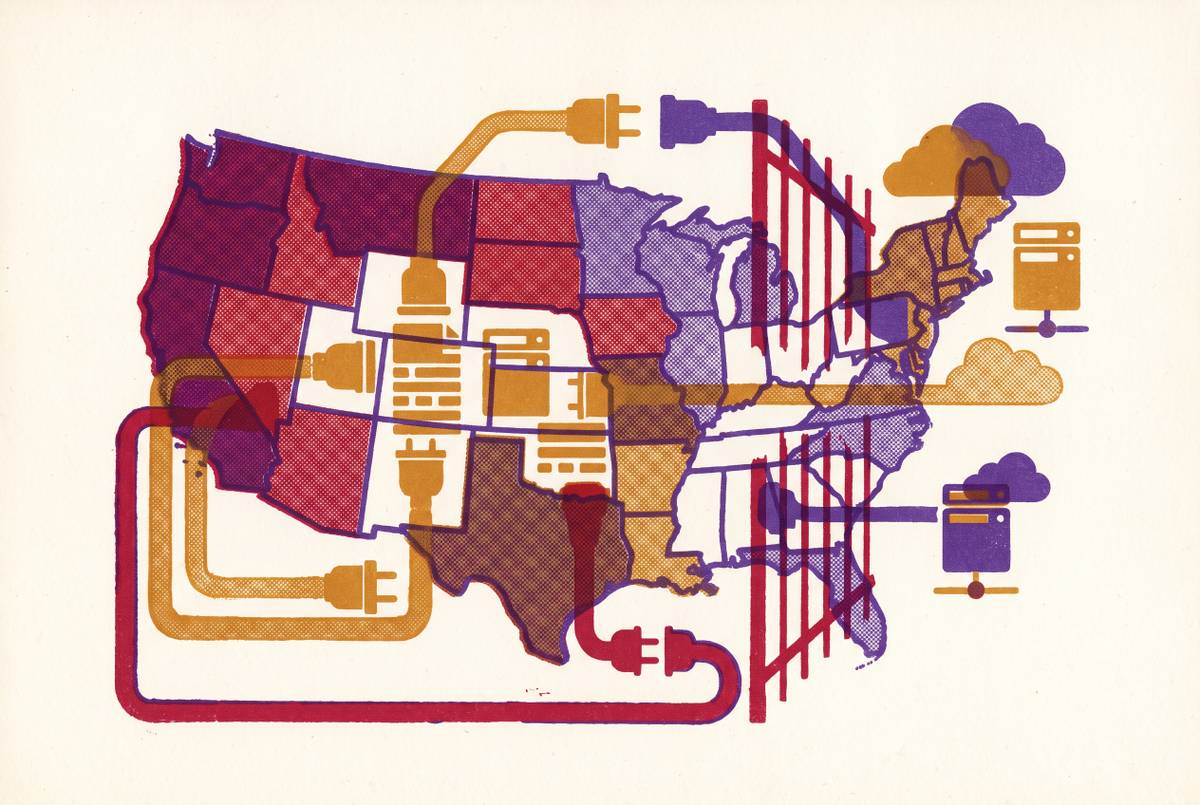
Most engineering teams lock down the database, encrypt the primary datastore, and call the compliance box checked. That instinct is understandable but points at the wrong target. For SaaS products with healthcare API integrations, HIPAA risk concentrates in the integration layer, not the core application, and teams that miss this spend their compliance effort in the wrong place.
The assumption feels obvious: PHI lives in the core app, so that's where the danger sits. Most modern healthcare SaaS platforms don't work that way anymore. The app orchestrates data moving between other systems more than it stores that data itself.
Integrations are structurally different from the rest of the stack because they pile up third-party credentials, cross-system access, retry logic, logs, and vendor relationships all in one place. Truto's integration guide calls this a "hot zone," and the label fits. Every API connection that touches PHI creates three separate liabilities at once: a possible breach vector, a business associate agreement requirement, and an audit liability. All three switch on the moment the connection goes live, not later when something breaks.
Censinet's HIPAA API compliance guide states that the HIPAA Security Rule's technical safeguards, access control, audit controls, integrity, authentication, and transmission security, apply specifically to electronic PHI moving through APIs. The integration layer is the main surface where those safeguards actually get enforced. Think of it like airport security: nobody worries about the plane's engine bolts when the real risk is what's walking through the checkpoint carrying a boarding pass and a bad idea. The core app is the airplane. The integration layer is the checkpoint, where the trouble gets through.
The breach record confirms it: third-party integration failures are driving healthcare's worst incidents
The largest healthcare breaches on record didn't start inside a hospital's core system. They started at the integration layer, exactly where this argument says to look.
Change Healthcare suffered a ransomware attack in February 2024 that compromised data belonging to roughly 192.7 million people, the largest healthcare data breach ever recorded. According to Truto's guide, UnitedHealth told Congress the attack traced back to compromised credentials and a remote portal with no multi-factor authentication in place, reported by the Associated Press. That's a textbook integration-layer failure, not a core application failure.
Scott Mattila, CISO at Intraprise Health, a Health Catalyst Company, called it "a stark reminder of unresolved vulnerabilities involving vendors, third parties, and partners, issues long debated but largely unaddressed". That sentence could serve as the epitaph for half the breach reports filed with regulators over the past few years.
The pattern isn't limited to one incident. Truto's guide reports that a majority of 2024's mega-breaches involved business associates of HIPAA-covered entities. The third-party vendor layer isn't a rare edge case; it's the most common way these failures happen. Verizon's 2025 DBIR, cited in Truto's guide, found that third-party involvement in breaches doubled to thirty percent, while credential abuse remained a leading initial access vector. The integration layer sits directly in the path of both trends.
Regulators noticed. Konfirmity's HIPAA for SaaS guide reports that OCR settled numerous investigations in 2024, with business associate agreement problems appearing as a contributing factor in many of them. Business associates were responsible for breaches affecting tens of millions of records in early 2025. The lesson from the breach record is consistent: attackers don't need to break into the vault when the side door held open for a vendor integration is unlocked.
Translating HIPAA requirements into engineering decisions at the API level
HIPAA doesn't hand engineers a line-by-line technical spec for building APIs. Translating the Security Rule's safeguards into actual software architecture still produces a specific, non-negotiable set of engineering decisions. Four categories of technical safeguard apply directly:
Encryption in transit and at rest comes first. Truto's guide and Censinet both call for TLS 1.2 or higher on every API communication. Credential fields, OAuth tokens, refresh tokens, API keys, need AES-256 encryption and should be masked in any admin interface, no exceptions for convenience.
Access control and authorization come next. Censinet's guide explains that HIPAA requires unique user identification and least-privilege access. In practice that means a unique OAuth 2.0 client ID for every third-party app instead of one shared API key, scoped tokens (a patient-facing app gets something like patient/*.read, while a clinician portal gets broader scopes), and role-based or attribute-based access control. No anonymous endpoints. No shared API keys across tenants. No generic service accounts standing in for real identity.
Audit logging is where good intentions go sideways most often. Truto's guide flags a common mistake: dumping raw HTTP responses into tools like Datadog or CloudWatch to make debugging easier, which instantly creates a violation. Compliant logging captures timestamps, unique identifiers, source IPs, request methods, endpoints, and actions involving ePHI, but stores metadata and hashes rather than the full payload body.
Data integrity and transmission security round out the list. Censinet describes cryptographic hashes, a SHA-256 hash of a FHIR bundle, for example, included in request headers and checked by the system receiving them. Digital signatures on JSON Web Tokens or FHIR documents confirm both who sent something and that it arrived unchanged.
Two protocols aren't optional extras here. FHIR R4 is the standard for EHR and health-system interoperability, and OAuth 2.0 with OpenID Connect are the standard tools for authentication and delegation in healthcare APIs. Skipping them when connecting to a covered entity isn't really an option on the table.
One more detail changes how teams should think about their own infrastructure. Konfirmity's guide notes that simply storing ePHI, even encrypted, even on a cloud storage bucket where the vendor never holds the decryption keys, triggers compliance obligations. The statute's operative word is "maintains," and it catches more architectures than most teams expect. That single word is the hinge that swings the conversation from engineering into contract law, which is exactly where it goes next.
The BAA requirement's downstream effect on integration vendor relationships
Business associate status isn't a box a SaaS vendor gets to opt out of once its integration touches ePHI. It cascades: every subcontractor down the chain that handles ePHI needs its own signed BAA with the party above it.
The list of who counts as a business associate in an integration context is longer than most product teams assume. Konfirmity's guide names EHR analytics platforms pulling data from systems like Epic or Cerner, telehealth video tools, practice management software handling billing or intake, and cloud hosts storing ePHI. All of them are business associates, directly on the hook for the Security Rule and parts of the Privacy Rule.
The obligation doesn't stop at the vendor a company signs a contract with directly. HIPAA Vault's 2026 SaaS compliance guide explains that a SaaS vendor is legally responsible for confirming its own cloud host has signed a BAA too. It extends to every subcontractor the integration touches, one link at a time, like a chain of dominoes where the last one falling still counts against whoever set the first one up.
The paperwork itself has gotten heavier. Modern BAAs increasingly include a 72-hour system restoration standard, requiring vendors to show they can bring critical systems back online within three days of a disruptive incident or a contingency plan activation. HIPAA Vault's guide ties this to newer federal incident response benchmarks.
The newest blind spot involves AI. Organizations are plugging AI-powered tools into clinical and administrative workflows without a clear read on whether those vendors even qualify as business associates. AI agents calling EHRs and clinical APIs through function-calling protocols represent a growing category of integration risk, and a lot of them have no BAA in place at all.
The enforcement numbers back up why this matters beyond theory. Konfirmity reports OCR collected more than $9.9 million in HIPAA settlements across 22 enforcement actions in 2024, with BAA deficiencies contributing to many of them. Missing or outdated BAAs consistently rank among the top three failure points regulators find.
Three integration patterns that routinely create HIPAA exposure even in teams that believe they are compliant
Most HIPAA violations in healthcare SaaS integrations aren't the result of ignorance. Teams that believe they've already addressed the compliance requirements keep tripping over the same handful of architectural habits.
The first pattern is logging raw payloads. Teams add debug logging at the integration layer to make troubleshooting easier and end up building an accidental PHI warehouse inside their own observability stack. Truto's guide flags this directly: log metadata, decisions, and hashes, never the full payload body. A log containing raw API responses pulled from an EHR is a violation no matter how good the intentions behind it were.
The second pattern is shared credentials and generic service accounts. Using one API key or OAuth client across multiple tenants, or leaning on a generic service account with broad permissions, breaks HIPAA's unique user identification rule outright. It also makes it impossible to produce the per-user audit trail an OCR investigation will demand. Censinet's guide is blunt about the fix: every third-party app gets its own OAuth 2.0 client ID, full stop, no sharing.
The third pattern is the one most SaaS teams never see coming, tracking pixels and marketing scripts. Konfirmity's research and the underlying industry data point to the marketing analytics layer as a live and active enforcement target. Tracking pixels and similar tools, sitting on healthcare portals and appointment scheduling flows, were quietly transmitting health-related data with no controls to speak of. Industry reporting puts penalties and settlements tied to pixel-tracking violations at more than $100 million between 2023 and 2025. Failing to audit which scripts run on a page, or skipping tag manager governance altogether, now gets treated as willful neglect, Tier 4, the most serious HIPAA penalty classification there is.
That third pattern reaches beyond engineering. Marketing teams working on healthcare SaaS products need to inventory every tracking script running on their pages, pause pixels on authenticated portals and scheduling flows until legal counsel signs off, and get BAAs in place wherever they're needed.
All three patterns share the same root cause. Each one started with a team bolting on a new capability, better observability, easier multi-tenancy, sharper marketing attribution, without running a HIPAA impact analysis on the integration that capability created. The OCR enforcement record shows that auditors now examine evidence of continuous control alongside point-in-time documentation.
The proposed HIPAA Security Rule update and what it would change for integration architecture, if it is finalized
On January 6, 2025, OCR published a Notice of Proposed Rulemaking that would raise the technical bar for HIPAA compliance by a significant margin. It has not been finalized, and whether it gets finalized in its current form is genuinely uncertain.
The proposal calls for explicit mandates on encryption of ePHI both at rest and in transit, multi-factor authentication, vulnerability scanning, penetration testing, network mapping, and annual compliance audits. The NPRM also specifies TLS 1.2 or higher for data transmission.
The current status is worth tracking closely if only because the timeline keeps moving. The public comment period closed on March 7, 2025. The OMB's Unified Agenda targets July 2027 for final action, pushed back from an earlier May 2026 target. More than 100 hospital and provider groups have asked HHS to withdraw the proposal entirely.
That timeline matters for a very specific, very annoying reason: vendor sales emails. Teams that receive a message claiming they're already out of compliance with "new HIPAA security rules" can relax slightly, because they're not. The NPRM's requirements are proposed rather than enacted, and any vendor pushing urgency around a rule that hasn't been finalized, and might not survive in its current form, is overstating the timeline for its own benefit.
None of that means the proposed rule is safe to ignore. Every requirement in the NPRM, encryption everywhere, MFA everywhere, continuous audits, maps onto the same integration-layer patterns already described: encrypted credentials, scoped access, clean audit logs, verified data integrity. Building to that standard now costs less than retrofitting it under a compliance deadline later, whenever that deadline finally lands.
Sources
- HIPAA Compliance for API Integration in Healthcare | Censinet
- HIPAA For SaaS: Key Requirements, Steps, and Templates (2026) | Konfirmity
- How to Build HIPAA-Compliant Integrations for Healthcare SaaS | Truto Blog
- HIPAA Compliance for SaaS: Security & BAA Guide
- HIPAA Security Rule Notice of Proposed Rulemaking to Strengthen Cybersecurity for Electronic Protected Health Information | HHS.gov
- HIPAA Security Rule Update Postponed: More Time Given to Implement Major HIPAA Security Rule Changes