Dependency Risk Scoring for a Portfolio of Third-Party Integrations
Assess third-party risk across your entire portfolio, not one vendor at a time.
Dependency risk scoring for a portfolio of third-party integrations needs to measure more than whether each vendor looks secure. It needs to show where operations can fail, what data is exposed, and how hard recovery would be. A useful framework combines service type, criticality, data access, and replaceability into risk tiers, then keeps those tiers current as the portfolio changes.
Why a portfolio of third-party integrations cannot be risk-managed one vendor at a time
Modern dependency stacks combine SaaS vendors, cloud platforms, data processors, AI providers, managed service partners, and embedded subcontractors. Each brings dependencies of its own. A vendor that looks harmless on paper may sit at the center of a critical workflow or hold data that cannot easily move elsewhere. The contract describes one relationship, but the operational exposure extends beyond it. Procurement sees a guest list. Infrastructure inherits the family tree.
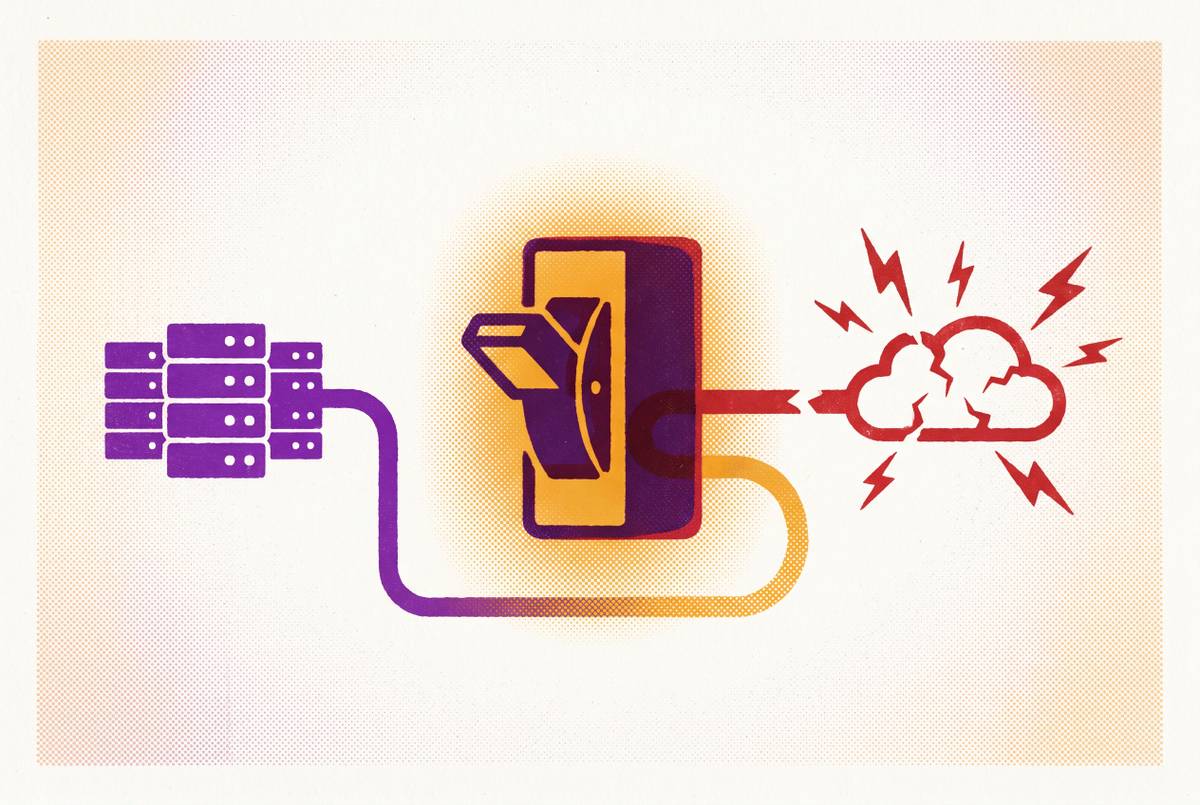
Multiple critical workflows can share the same cloud provider, identity layer, or AI platform without leadership seeing how much exposure has gathered at that node. A disruption then cascades across dependent functions. The MOVEit vulnerability and the CrowdStrike outage demonstrated how a single third- or fourth-party failure can propagate faster than manual triage can respond. Shared dependencies also concentrate pricing, regulatory, and portability risk.
Scale makes this harder to see. Thorough recurring manual assessments become impractical across hundreds or thousands of vendors, so attention goes to visibly critical relationships while the long tail receives less scrutiny. Meanwhile, vendor scores based on different assumptions cannot show which dependency would stop the most work or take the longest to replace. Even when all the ratings are green, the portfolio can be easy to break.
Why static questionnaires produce scores that are wrong by design
Periodic questionnaires fail because their answers can go stale before the next review. A questionnaire completed in January may describe controls that no longer exist by March. Vendor self-reporting adds another weakness, because good answers alone cannot show whether the controls a vendor says it has are in place without evidence from outside the vendor. A longer questionnaire just gives stale information more pages.
Critical vendors get a thorough review, while vendors that draw less attention may get no review at all. A vendor that passes an annual review in February may be compromised by April without the assessment process surfacing the change. Bitsight’s State of Cyber Risk and Exposure report reports that only one in three organizations continuously monitors all of their third-party relationships for cyber risk. ProcessUnity’s State of Third-Party Risk Assessments 2026 Report found that assessments typically take more than 40 manual hours of internal team effort, making uniform treatment expensive as well as incomplete.
Regulatory obligations expose the mismatch between an annual document and a changing relationship. DORA requires continuous ongoing monitoring of ICT third-party relationships. NYDFS Part 500 requires periodic third-party assessments and updates to the risk assessment at least once a year and when changes to the business or its technology have a material effect on cyber risk. A defensible score therefore needs continuously collected, objective signals as well as structured assessment.
The four scoring dimensions every integration node needs
Service type establishes what an integration does and how far a failure could spread. Infrastructure, identity, communications, analytics, managed services, workflow automation, data processing, and AI-model inference do not create interchangeable exposure. A compromised build tool or CI runner can affect every artifact its pipeline produces, while a compromised analytics tag affects reporting fidelity. Function sets the starting point for the score. AI providers need a distinct sub-category because they can process enterprise data, influence decisions, depend on outside models, and change functionality quickly.
Business criticality then places that function inside actual workflows. The useful distinction is between work that stops entirely and work that degrades but continues. Contract value is a poor substitute for this test. To score criticality, map the dependency and assess whether the business could operate at acceptable capacity through outages lasting hours, days, or weeks.
Data access adds the exposure that an outage-only assessment misses. Relevant access includes personal or regulated data, proprietary model weights, brand corpora, authentication credentials, and production secrets. An integration’s handling of regulated data brings the applicable obligations into scope, including GDPR, DORA, HIPAA, and NIS2. For AI writing infrastructure, training or fine-tuning on a brand corpus gives the training entity a copy of that corpus. That is a separate risk from software availability.
Replaceability sets how long the business is stuck when something goes wrong. The score must reflect whether the integration can move within hours, days, weeks, or months without breaking dependent systems or losing institutional data. Proprietary formats, provider-bound model weights, hardwired authentication flows, and non-portable build toolchains all raise switching costs. Security strength does not cancel that exposure. The four dimensions must be read together, because a well-secured vendor with no practical replacement can still create high inherent risk.
How AI provider integrations introduce a distinct risk tier that standard TPRM misses
AI integrations make those interactions especially visible. A provider may carry out a business-critical function, process a proprietary corpus, and host fine-tuned weights that are hard to move elsewhere. Fine-tuning embeds voice in model weights rather than applying it only through prompts, so control over those weights becomes part of replaceability. “The model works” is not a portability plan. The model provider, vector store or fine-tuning endpoint, corpus curation toolchain, and tone-classification layer are separately scoreable nodes.
Watermarking adds another dependency to this picture in 2026. The EU AI Act’s machine-readable marking requirements enter into force with limited scope on 2 August 2026, with a transitional deadline of 2 December 2026 for generative AI systems already on the market before 2 August 2026. The Act is technology-neutral, rather than requiring a particular token-selection method. Some text watermarking methods weave the signal into word choices during generation, and paraphrasing or processing through another model can degrade or remove it. Compliance status and detection continuity therefore need separate attention.
Provider-controlled detection also changes the relationship between output and supplier. The entity applying a watermark may hold the key needed to detect it, leaving the content team dependent on that provider’s detection infrastructure. Detection availability cannot be assumed from watermark availability. For an AI provider sub-tier, the score needs to account for security certifications, watermarking status, detection API availability, and data-portability terms. Switching models can require reassessing whether detection remains possible across the pipeline.
Multi-model designs trade one kind of dependency for another. Using different models at different stages can cut watermark lock-in and single-provider concentration, but each model adds another third-party node. Sequential multi-agent architectures also add inference time because each agent waits for its predecessor. If one node slows or fails, downstream work stalls. The score must therefore reflect both the providers and the dependency chain connecting them.
Building a tiered classification system from the four dimensions
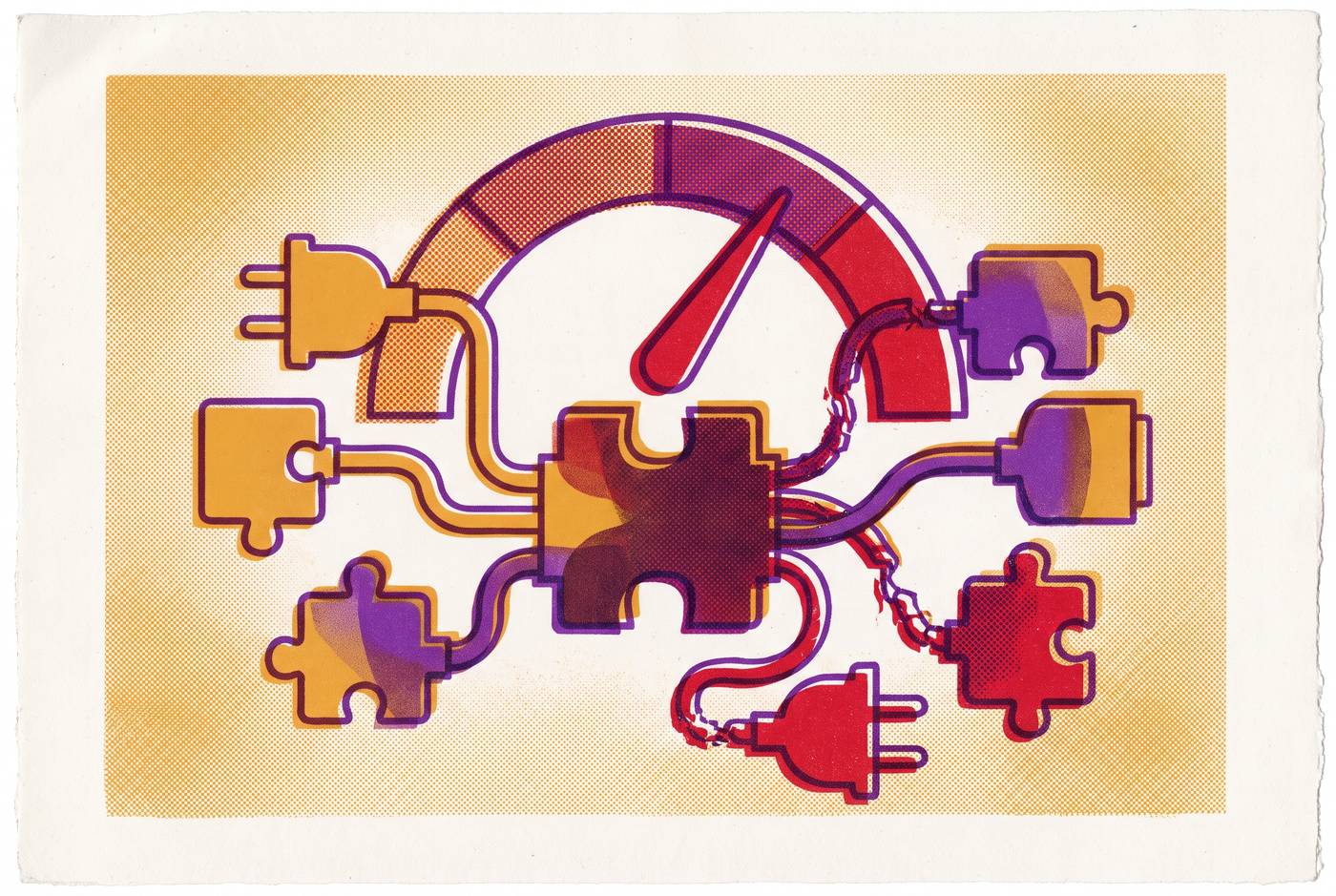
To turn that framework into an operating system for review, assign each node an inherent score before considering vendor attestations. Combine its service type weight, criticality weight, data access category, and replaceability score. The resulting tier determines monitoring intensity, review frequency, and escalation conditions. Order is important here. A reassuring attestation should not erase the inherent exposure created by a critical, hard-to-replace integration.
Tier 1 covers integrations that score high on two or more dimensions. These get automated monitoring at all times, a human review each quarter, and replacement runbooks that are written down and tested. Contractual SLAs, incident notification commitments, and data-portability obligations belong in place before onboarding. If the integration cannot be replaced quickly, that constraint remains visible in its risk score.
Tier 2 covers integrations scoring high on one dimension or moderate on two. These receive automated alerts on posture changes and annual structured review, with defined escalation criteria. Data access expansion, deeper workflow dependence, and regulatory change should trigger reassessment for Tier 1. Tier 3 covers integrations with limited data access that are replaceable within days and do not support critical workflows. They receive periodic automated checks and human review when posture signals change.
Fourth-party mapping can change the classification that direct-vendor scores suggest. When a Tier 1 vendor uses the same provider for its critical infrastructure as three other Tier 1 vendors, it creates a concentration risk that assessments of each vendor on its own hide. The same applies when several AI model providers route inference through one cloud infrastructure layer. That shared layer can represent Tier 1 concentration even when no individual model provider does.
Instrumenting the portfolio for continuous scoring rather than periodic snapshots
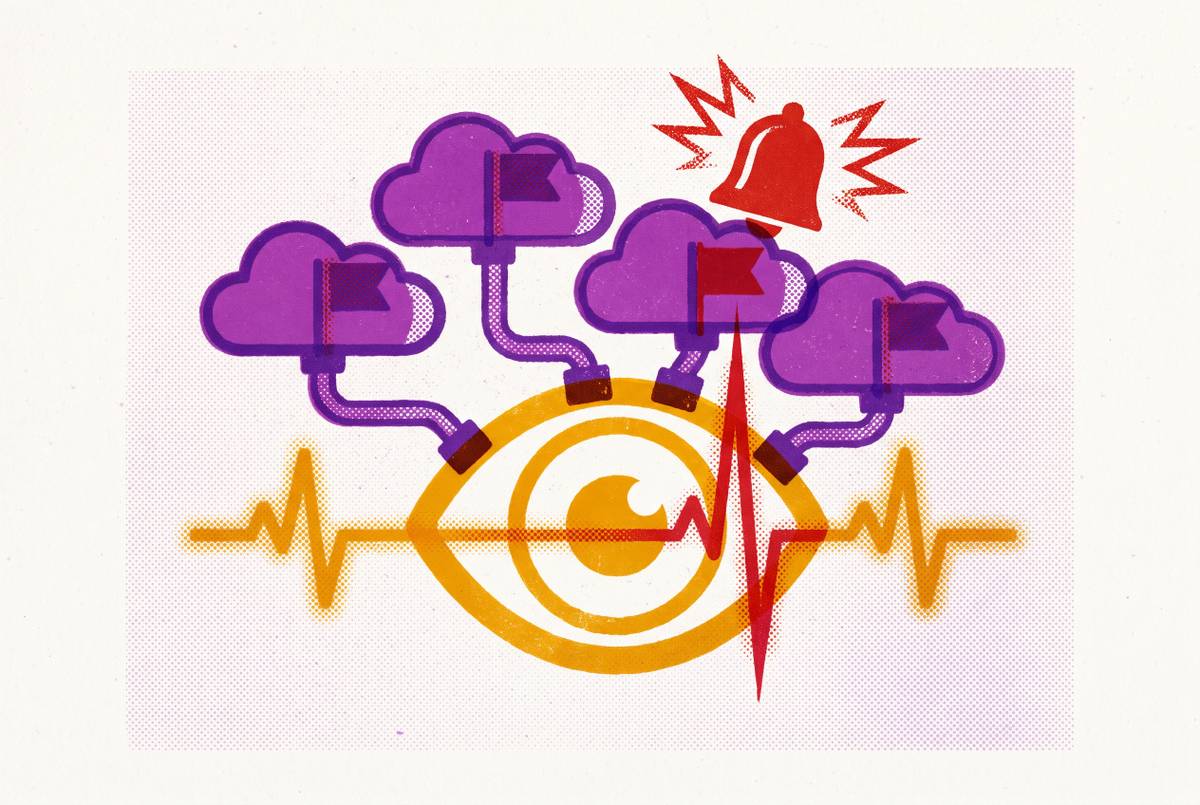
Continuous scoring needs evidence that does not wait for a vendor to answer. Externally observable signals include infrastructure configurations, open ports and services, compromised credentials, patching velocity, botnet infections, and DNS health. Vendor silence is not evidence of safety. External monitoring provides some of the evidence, while changes in how data flows inside the business and how workflows depend on vendors provide more.
For software dependencies, the scoring system also needs a current inventory. A build-time software bill of materials, generated with Syft in SPDX or CycloneDX format, provides a machine-readable account of direct, transitive, and build-tool dependencies. Transitive dependencies deserve attention because they can remain in use long after their original approval received scrutiny. Without an up-to-date SBOM, the score may describe yesterday’s software. The inventory is the connection between the framework and what is actually running.
To make that connection operational, configure the dependency gate in CI to feed the current inventory and relevant changes into scoring. Checks on every commit can catch risk at introduction, before a later audit. A critical CVE should put the affected dependency in line for reassessment, while a detected increase in data flow should lead to a review of the node’s data access and criticality. The gate belongs in the developer workflow. If it is handled only as a separate GRC task, the scoring system has to wait for the results downstream.
Not every trigger originates in a build, however. Ownership changes, public roadmap shifts, new AI features, and regulatory changes should also queue re-scoring. AI applicability dates need scheduled triggers that account for which providers the rules cover and their transitional deadlines, so every provider is not declared noncompliant on the same day. Posture alerts should also update the risk judgment against its inputs.
Maintaining the framework as the portfolio changes
Portfolio drift often starts after a tool gets approved in the usual way. A business team adopts a tool, then gradually connects more systems, sends it more sensitive data, and makes it part of daily operations. Products that had no AI gain AI features, which change data access and which models they depend on while the vendor’s name stays the same. Meanwhile, separate Tier 2 additions can accumulate on one shared fourth-party layer.
The maintenance discipline starts by treating onboarding as the first scoring event, before an integration goes live. Automated triggers then cover ownership changes, data access expansion, regulatory applicability dates, and CVE publication between scheduled reviews. Human attention remains proportional to the tier. Tier 1 gets quarterly review, while Tier 3 relies on automated monitoring unless signals change. Giving every integration the same review burden makes the framework harder to sustain.
A defensible score must be explainable to an examiner. DORA and NIS2 require demonstrable ongoing oversight. The practical test is whether a score can be traced to its inputs, its last update event, and the monitoring signal that would change it. For AI writing infrastructure, that explanation also includes watermarking status, detection access, and portability terms. A score without that lineage is a number wearing a lanyard.
The architectural consequence is the point of keeping that evidence current. Scores identify where redundancy deserves investment, where an exit becomes harder with every new connection, and where changing regulation warrants closer monitoring. Those judgments can change whether another workflow should depend on a provider already in use or whether too much depends on a shared infrastructure layer.