Data Integration Patterns for Multi-Tenant SaaS Products
Choose your database isolation model before you scale, or let technical debt choose for you.
Building a multi-tenant SaaS product is a lesson in how fast good intentions become technical debt. The moment you take on a second customer, you have an integration problem. The moment you take on a hundred, you have an architecture problem. And by the time you're juggling thousands of tenants, each with their own credentials, schemas, compliance requirements, and data volumes, you realize that the patterns you chose in the first six months are either holding the whole thing together or quietly killing it. This article maps the specific patterns that work to the specific problems they solve. Not a tool catalog. A decision framework.
The stakes are real: the average enterprise now runs over 250 SaaS applications. The data integration market is on track to hit $17.58 billion in 2025 and nearly double to $33.24 billion by 2030. Engineering organizations are voting with their budgets. The integration surface is growing, the compliance bar is rising, and shortcuts taken for tenant one become structural debt replicated across every tenant that follows.
The Three Database Isolation Models and the Tradeoffs Each Makes Explicit
Here is something that took me longer than I'd like to admit to fully internalize: your isolation model is not a database configuration choice. It determines the blast radius of every integration failure, the compliance posture of every data flow, and the operational cost of every schema migration. Choose it wrong and everything downstream is fighting uphill.
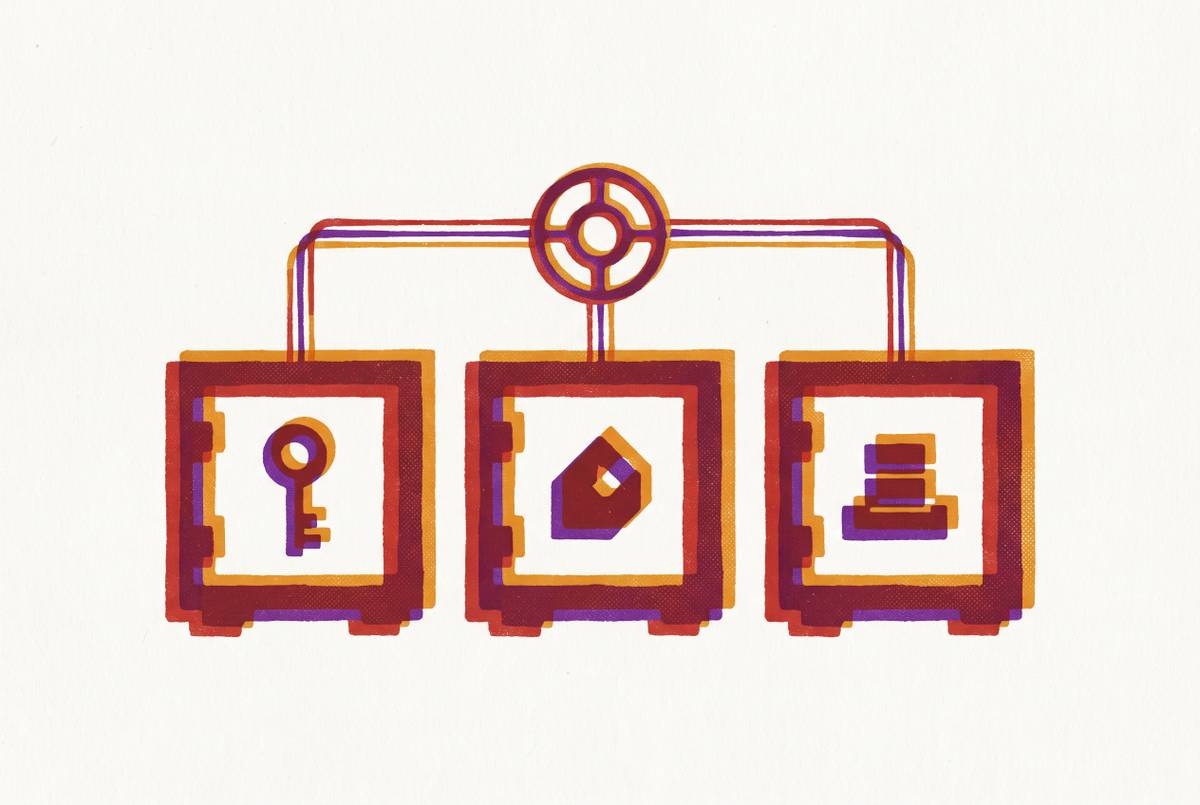
There are three real models in production today.
Silo Model: One Database Per Tenant
This is maximum isolation. Separate process, separate memory, separate storage, per tenant. No cross-tenant queries. No shared anything at the data layer. If one tenant's database catches fire, nobody else notices.
This is the natural fit for HIPAA, PCI-DSS, and enterprise contracts that require contractual guarantees of data separation. It satisfies security reviews almost automatically. It's clean.
The problem is the ceiling. One team reported that after adopting this model at scale, a single schema update meant deploying to hundreds of databases. Adding one index took hours. Infrastructure costs grew in direct proportion to tenant count. That's not a horror story, that's just the math.
Best suited for:
- Products with a relatively small number of large enterprise tenants
- Strict geographic data residency requirements
- Custom SLAs that demand physical separation
Pool Model: Shared Schema, Row-Level Security
The economics here are genuinely compelling. You can scale to 10,000-plus tenants with low operational overhead. One schema, one database, row-level policies doing the isolation work. For SMB-tier SaaS, this is often the right default.
The structural risk is also real. Isolation is only as strong as the RLS policy, and a single database-level vulnerability can expose your entire customer base simultaneously. CVE-2024-10976, a PostgreSQL vulnerability disclosed in late 2024, is the concrete example. RLS policies applied below subqueries could disregard user ID changes mid-session, meaning one tenant's query could return another tenant's rows in connection-pooled environments.
The lesson: RLS alone is not enough. Middleware-level tenant enforcement is required as a second layer. Always.
Bridge Model: Schema Per Tenant, Shared Database Instance
This is the middle ground that most SaaS products serving enterprise customers end up at. Logical isolation without full infrastructure duplication. The application tier stays shared and cheap. The data tier provides a meaningful separation boundary.
You get per-tenant indexing strategies, per-tenant partitioning, per-tenant data retention policies, all without cross-tenant interference. Most enterprise security reviews find it acceptable. Infrastructure costs stay manageable.
The operational complexity grows as tenant count grows. Schema migration tooling has to handle parallelized deployment across schemas. That tooling needs to be built intentionally, not bolted on later.
The Hybrid Reality Nobody Talks About Enough
Few production systems in 2025 use a single model exclusively. The common segmentation looks like this:
- SMB tenants on the pool model for cost efficiency
- Enterprise tenants on the silo or bridge model for compliance and performance guarantees
The migration trigger is usually contractual. When a tenant's revenue or compliance requirements cross a threshold, they graduate to a more isolated tier. AWS re:Invent 2024 surfaced a sharding approach for hyper-scale SaaS, distributing tenants across multiple database clusters using consistent hashing while maintaining schema-level isolation within each shard. Vitess for MySQL and Citus for PostgreSQL are the tooling candidates worth evaluating here.
How Per-Tenant Authentication Works in Practice and Where It Breaks Under Load
Every integration in a multi-tenant product is actually N integrations. One per tenant. Each with its own OAuth token, API key, refresh lifecycle, scope set, and revocation state.
Shared credentials feel like a shortcut. They are a trap.
- Rate limits apply at the credential level. One high-volume tenant throttles every other tenant sharing the same token.
- When a tenant revokes access, a shared credential breaks integrations for every tenant on it.
- Audit logs become meaningless. SOC 2 and HIPAA require demonstrating that each tenant's data was accessed only under that tenant's authorization. Shared credentials make that demonstration impossible.
What Tenant-Scoped Credential Architecture Actually Looks Like
Each tenant's OAuth tokens, API keys, and secrets live in an isolated credential vault keyed to tenant ID. Token refresh is per-tenant and non-blocking. A failed refresh for one tenant does not degrade others. Scopes match what the tenant actually authorized. Over-permissioned tokens create compliance exposure. Under-permissioned tokens cause silent integration failures that are genuinely painful to debug.
The Token Lifecycle Problem at Scale
Short-lived OAuth tokens are common in enterprise APIs. At thousands of tenants, a synchronous refresh strategy becomes a bottleneck fast. The standard pattern is async refresh workers keyed to tenant ID, with circuit breakers per tenant. Failed tenants are queued for retry. They do not block the refresh loop.
The compliance implications are layered:
- GDPR: Data accessed under a tenant's credentials must be attributable to that tenant's data processing agreement. Shared credentials make attribution impossible.
- HIPAA: Access to PHI must be scoped and logged at the covered entity level. Each tenant is typically a separate covered entity or business associate.
- SOC 2 Type II: Auditors look for evidence that access controls were enforced continuously, not just configured at setup. There is a difference.
Build vs. Buy Is a Real Question Here
Building and maintaining per-tenant credential infrastructure, including vault, refresh workers, scope management, and audit logging, is substantial ongoing engineering work. It grows with tenant count. The case for pre-built auth infrastructure, as found in embedded integration platforms, is strongest here. Platforms like Embedded (formerly Pandium) are built specifically for this problem and handle the credential lifecycle scaffolding so your team isn't rebuilding it from scratch for every new connector.
Event-Driven Pipelines as the Standard for Tenant-Safe Data Movement
Polling feels simple. It is not safe at scale.
Polling every tenant's data source on a fixed schedule creates compounding API call volume as tenant count grows. It's inherently coarse: either you miss changes between intervals, or you poll so frequently you saturate rate limits. And in a shared-schema model, polling queries that accidentally cross tenant row boundaries create the exact data leakage risk we just spent a section describing.
Change Data Capture as the Foundation
CDC tracks inserts, updates, and deletes at the database transaction log level. Changes arrive as a stream of events, not as periodic bulk extracts.
Log-based CDC is the most robust variant. It reads directly from transaction logs, adds no query load to production databases, and achieves near-real-time propagation. Each event carries a tenant ID. The pipeline routes events to tenant-scoped consumers. The tenant ID is the isolation primitive, and filtering must be exact.
This point is non-negotiable. If routing logic based on tenant ID fails even for a subset of events, data from one tenant is delivered to another tenant's consumer. That's a breach. Not a data quality issue. A breach.
Multi-Tenant CDC at Scale
Table proliferation in schema-per-tenant architectures can reach tens or hundreds of thousands of tables. CDC tooling has to handle this without requiring per-table configuration overhead.
Debezium 2.5-plus is the dominant open-source CDC platform as of 2025. It covers PostgreSQL, MySQL, MongoDB, SQL Server, Oracle, and more. The 2.x series introduced incremental snapshots without table locks and native support for Kafka 4.0 KRaft mode. Apache Flink CDC Connectors (Flink 1.18-plus) allow streaming directly from databases into Flink jobs without Kafka as an intermediary, which reduces latency and infrastructure footprint for Flink-based stacks.
ETL, ELT, and Zero-ETL: What Actually Applies Where
- ETL (transform before load) still applies in regulated environments where raw data cannot touch the destination without sanitization. HIPAA PHI processing is the common case.
- ELT (load raw, transform in the warehouse) is the modern default for analytics pipelines where the destination has sufficient compute. More flexible for iterative modeling per tenant.
- Zero-ETL is not a full replacement. It works well for operational data. Regulated or complex transformation workloads still require ETL or ELT stages.
Practical Design Rules That Actually Hold
- Tenant ID must be immutable and present on every event from the moment of capture. Retrofitting it downstream is unreliable.
- Consumer groups or stream partitions should be tenant-scoped. One tenant's event backlog should not delay another's processing.
- Dead-letter queues must also be tenant-scoped. A failed event should not block the pipeline for other tenants.
Schema Variance Across Tenants and Why a Unified Data Model Is Not Optional
Here is something that surprises people who haven't lived through it. Two tenants can use the exact same CRM, be on the exact same product tier, and return structurally different payloads from the same API endpoint. Custom fields, optional modules, different record types, different API versions enabled. They look identical from the outside. They are not.
Enterprise tenants often negotiate custom data mappings as part of their contract. What looks like a product feature from the sales side is actually a per-tenant transformation requirement on the engineering side. And then third-party vendors deprecate API versions, and now tenant A's integration was built against v1, tenant B's against v2, and your canonical model needs to accommodate both.
What a Unified Data Model Actually Does
It defines canonical field names, types, and relationships that all tenant-specific schemas are mapped to before entering the core product. It shifts per-tenant variance into the transformation layer, which is inbound normalization, rather than into the product's business logic.
The downstream result is significant. Queries, analytics, and product features become tenant-agnostic. The product operates on the canonical model, not on raw tenant schemas.
Composable Connector Metadata: The Implementation Pattern
Each connector defines its schema, auth pattern, rate limits, and transformation logic in a standardized format. The connector is a self-describing artifact, not an imperative script. Tenant-specific overrides (custom field mappings, non-standard record types) are expressed as configuration layered on top of the connector's base schema, not as code forks.
This enables automated tenant provisioning. When a new tenant connects an integration, the connector metadata drives setup without manual engineering intervention. That's the part that scales.
When Schemas Change (and They Will)
Third-party API changes, including field renames, deprecations, and type changes, must be absorbed at the connector layer and reflected in the canonical model without breaking existing tenants. Schema versioning for the canonical model is a first-class engineering concern. Not a migration script run once at release.
Where Unified Data Models Actually Fail
Over-normalization collapses too much tenant-specific information into a lowest-common-denominator schema and loses data that some tenants need for their workflows. Under-normalization allows too many tenant-specific extensions into the canonical model and recreates the variance problem inside the product.
The right boundary is product-specific. The canonical model should cover everything the product's features actually consume. Tenant-specific data that the product doesn't use can stay in a tenant-scoped extension layer. That boundary decision is worth getting right early, because changing it later is expensive.
Compliance Boundaries as Integration Architecture Constraints, Not Audit Checkboxes
The framing shift is the whole point of this section. Compliance requirements are design inputs. Not post-launch audits.
A GDPR data residency requirement means EU personal data must not leave the EU without adequate safeguards. Discovering this after you've built a single-region pipeline architecture means rebuilding the pipeline. HIPAA data segregation means PHI cannot comingle across covered entities. Discovering this after you've adopted a shared-schema pool model for enterprise healthcare tenants means rebuilding the data layer. SOC 2 access scoping means access controls must be demonstrably enforced at the tenant level throughout the audit period, not just described in a document.
These requirements, when treated as architectural constraints from day one, change specific decisions:
- Isolation model selection: Compliance requirements for specific tenant segments determine which isolation model is even on the table.
- Data residency: Multi-region pipeline topology, with tenant-to-region assignment enforced at the routing layer, is a compliance requirement disguised as an infrastructure decision.
- Audit logging: Every data access event must be attributable to a specific tenant, a specific credential, and a specific authorization. This is why per-tenant auth matters beyond just rate limiting.
- Data retention and deletion: GDPR right-to-erasure requests require the ability to delete a specific tenant's data completely and verifiably. In a shared-schema environment without strong isolation, that deletion becomes a surgical operation in a crowded room.
The engineering teams that get this right are the ones that put a compliance engineer (or at minimum a compliance-aware architect) in the room during the data model and pipeline design conversations. Not in the room six months later for the audit prep conversation.
The integration architecture is not the thing you build and then hand to the compliance team. It is the thing the compliance team helped you design. That sequence matters more than almost any specific pattern or tool choice described in this article.