Audit Logging Requirements for Third-Party Data Access
Connecting humans to AI systems in audit logs closes compliance gaps across HIPAA, PCI DSS, DORA.
Audit logging for third-party data access breaks down when an AI pipeline leaves a record of the credential but not the actor behind it. Closing that gap requires more than collecting extra logs. It requires records that connect the human session, the AI system, the model version, and the access decision, with storage and review controls suited to HIPAA, PCI DSS, DORA, and the EU AI Act.
Why standard logging breaks when AI pipelines touch third-party data
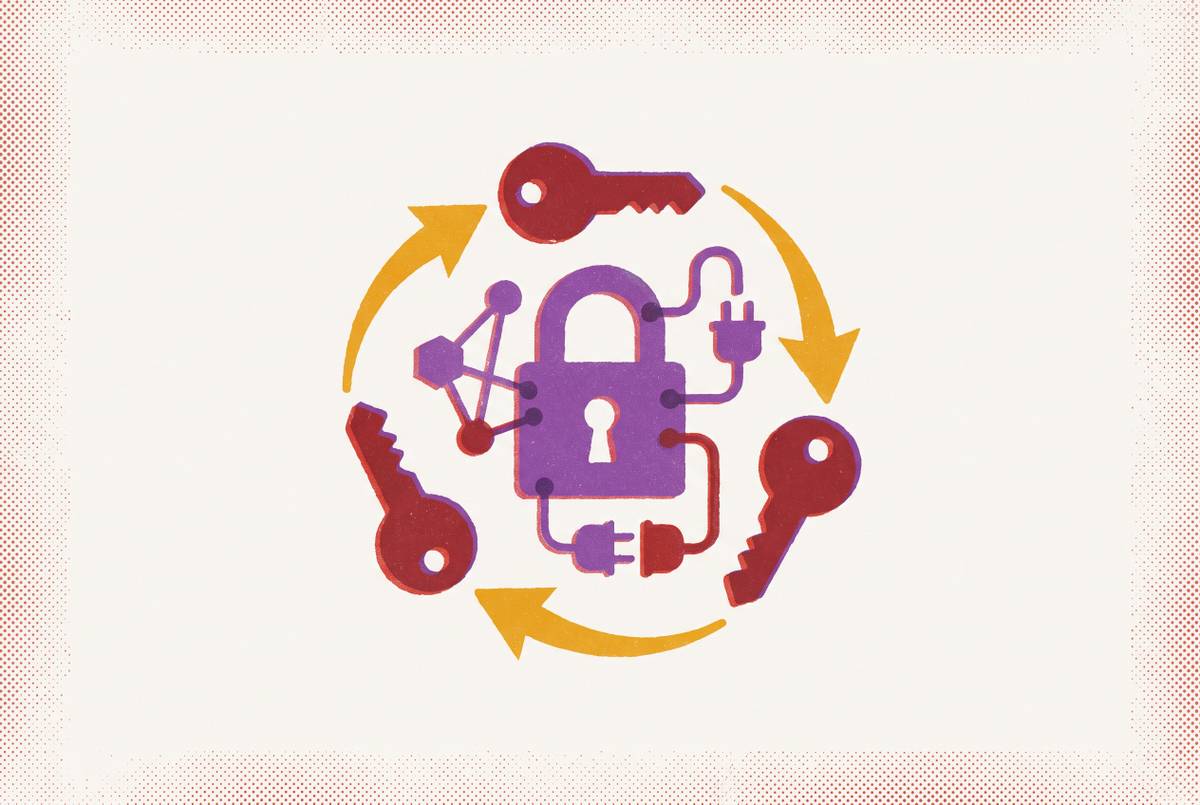
A service account key appears in the log, but there is no human name and no model version. The entry proves only that a credential authenticated. That distinction is the structural flaw. The system has recorded the key turning in the lock, while leaving out who sent it there.
Conventional log schemas often omit the action layer, including the directing system, the model that ran, and the upstream agent or human session. Off-the-shelf AI APIs return outputs without emitting the structured decision records needed for reconstruction. In a multi-agent content pipeline, a discovery agent may call APIs, an orchestrator may tell a writing model what to do, and a publishing layer may send out the result. Each hop may leave a record in a different system, or none at all. Consequently, authentication can pass a compliance check while attribution and traceability fail.
How HIPAA's audit controls apply to AI tools that handle ePHI
HIPAA’s Security Rule audit controls apply when AI tools access data that is electronic protected health information, or ePHI. The January 2025 NPRM proposed bringing AI tools that interact with ePHI into risk management analyses and technology asset inventories. That proposal remains unfinalized as of late 2026. It does not specifically require logs of prompt content, model versions, or automated workflows, so logging these should not be described as a new duty under the proposal.
Attribution requires unique user identification. An authenticated human identity or a dedicated service account provides a distinct identity, while an API key tied to a shared credential does not. For an AI pipeline, that identity must support both the granular per-call record and the reconstructed chain across agents. Emergency “break-the-glass” access also needs immediate alerts and documented justifications. The same controls are needed when an agent accesses data outside its defined workflow.
Protection matters as much as capture. Hardware, software, and procedural controls must keep the records safe, with separation of duties so administrators cannot change their own logs. The records must be kept for at least six years and protected against tampering. But logging prompts verbatim can put ePHI into the audit store, turning the evidence cabinet into another patient-data repository. Where prompt evidence is needed, cryptographic fingerprints preserve a reference to the content without copying that content into the log.
What PCI DSS v4.0.1 now requires for audit logs in payment data environments
PCI DSS v4.0.1, which has been mandatory since 31 March 2025, makes the way logs are reviewed a compliance control in its own right. Requirement 10.4.1.1 requires automated log review, so collecting logs and checking them by hand now and then falls short. That changes the practical meaning of having logs in a cardholder data environment, or CDE. A folder full of entries is evidence storage. The control needs both the records and a mechanism that reviews them.
Attribution remains the other pressure point. When an AI pipeline uses shared credentials to access the CDE, the records kept under Requirement 10 lose who was behind the access. Shared credentials also break Requirement 8’s identification and authentication requirements, including unique user identification. A more descriptive label on the same shared key does not make it accountable.
PCI DSS sets a 12-month retention floor for CDE access records, including AI-initiated access. Retaining the model identity and version with those events extends that evidence to the system that performed the access. Otherwise, the access survives in the archive while its AI context disappears.
What DORA adds for financial entities and their ICT third-party providers
DORA raises the bar from retained evidence to evidence that financial entities can produce on demand. It became legally binding on 17 January 2025 and is actively enforced in 2026. Its rules for who can access what cover privileged accounts, service identities, and machine identities as well as employees who enter through SSO. The practical test is whether the organization can show the access path during an inspection. “Someone is pulling a spreadsheet” is not much of a control.
In a live inspection, supervisors can ask the CISO, IT, and compliance leads to show privileged accounts, the latest rights reviews, and access lifecycle records with timestamps and approver decisions. For AI access, that chain includes the human session that initiated the work. It also includes what happened to the access path when that person’s role changed. Spreadsheet-based reviews and SSO-only coverage leave parts of that chain outside continuous supervision. Immutable, exportable, live-queryable evidence makes the chain available without an after-the-fact assembly exercise.
DORA’s third-party scope adds another layer. Financial entities must show who can administer ICT provider consoles, how those rights are reviewed, and where the review logs are stored. For AI services, this reaches the credentials used to call the provider and the people authorized to rotate or revoke them. The model call and the authority to maintain its access are separate parts of the same audit surface.
What the EU AI Act's Article 12 record-keeping obligation actually requires
The EU AI Act’s Article 12 requires high-risk AI systems to technically allow automatic recording of events over their lifetime. The decisive word is automatic. A timeline assembled later from tickets, transcripts, or memory is reconstruction. The obligation is specific to high-risk systems rather than every use of an AI API. Within that scope, incidental application logs are not a substitute for structured event records.
The Act came into force on 1 August 2024. After the Digital Omnibus on AI deferral, providers and deployers must meet Article 12 record-keeping and Article 17 retention obligations from 2 December 2027 for stand-alone Annex III systems and 2 August 2028 for Annex I embedded systems. Retention floors are at least six months for most high-risk systems and 24 months for biometric identification and law enforcement systems. Provider and deployer penalties can reach tens of millions of euros or a percentage of worldwide turnover, with a separate tier for higher-severity violations.
An LLM proxy or middleware layer is a natural recording point because it sees the request context, model endpoint, and response. It can capture the specific model version used for the call before returning the response. A family name or “a large language model” does not supply that traceability, particularly when third-party versions change between requests. Per-call model identity also supports provenance when different models contribute different watermark signals.
The twelve fields that satisfy all four regimes simultaneously
A common schema is the practical destination, but a field count is not a compliance guarantee. The twelve-field schema brings the requirements for attribution, correlation, model identity, and protected evidence into one record. The requirements given here do not set out a complete twelve-field checklist that all four regimes require by law. They do establish what the record must make possible, namely identifying the access and reconstructing its chain without losing the human or machine responsible.
Dual attribution is the central repair. Each entry has the AI system identity and the authenticated human user whose session led to the access. Neither substitutes for the other, and team or project labels do not replace the user. The record also needs the specific model version and enough request context to connect the event to the surrounding workflow.
The common schema then needs a durable envelope, including record and request identifiers, schema version, deployer identity, and workflow attribution. Its integrity depends on append-only storage that the monitored actors cannot modify. How long it must be kept depends on all the rules that apply to the evidence, even when one regime allows a shorter period. SOX adds a separate consideration for organizations subject to it, extending retention to seven years where AI pipeline logs form part of the audit work papers. A shared schema can simplify capture, but it cannot flatten different retention and review duties into one rule.
Where the schema breaks in practice: model version drift, prompt logs, and mutable storage
Model version drift breaks an otherwise complete record when it relies on the version captured at deployment. A third-party provider can change the model without an entry in the deployer’s change management system. Version pinning at the API call level is the durable fix. This is especially important in adversarial multi-model pipelines, where the model in use can change between generation requests.
Prompt logs fail in a different direction by collecting too much. Putting a verbatim prompt that contains ePHI in the logging system makes another copy of regulated data. The log should store a cryptographic fingerprint. There is also an input-access issue when brand corpus content is sent to a third-party model API on every generation call. That traversal is a loggable data-access event, with GDPR Article 28 processor obligations and Article 12 input logging in scope.
Mutable storage undermines the evidence even when every field is correct. Ordinary application logs can be modified or deleted by operators with sufficient access. A record that the subject can erase is a diary with a convenient shredder attached. WORM-compliant storage or cryptographically chained append-only stores provide the required protection where standard observability storage does not.
What an Article 12–compliant log record looks like at the API call level
At the API boundary, the record becomes a single structured, append-only entry emitted when the call completes. Its schema version keeps the entry parseable as the format evolves. Its unique record ID is a ULID, which is sortable, collision-resistant, and carries an embedded timestamp. Its request ID correlates the entry with application, model, and downstream system logs. These fields give the event an address in the wider audit trail.
The system ID identifies the pipeline or orchestrator as registered by the deployer. The deployer ID names the organization. Team, project, and workflow attribution shows where the call fits in the work, while the authenticated user field links it to the human session. Those identifiers sit with the per-call model identity and version. Together, they describe which organization’s system acted, in which workflow, and on whose session.
The LLM proxy is the emission point because it sees both sides of the exchange. It holds the request context and sees the model endpoint, version, and response before returning that response to the caller. In a multi-model workflow, each draft and critique call gets its own event record. The convergence record for the final output is a separate entry that references the prior records by request ID.
How adversarial multi-model writing pipelines create a distinct logging surface
Adversarial multi-model writing systems turn one content task into a chain of separately attributable operations. A draft model writes text, critique models challenge it, and a voting mechanism helps decide the result as the work goes through recursion. Each recursion and critique creates a discrete model call, while the vote is a further operation. The logging surface grows with the recursion depth, so a finished piece needs more than one record. A single output does not mean a single event.
Each agent needs its own model identity and version in that chain. If the critique model differs from the draft model, or a provider updates one mid-run, the records must preserve that divergence. Flattening the run to one model identifier removes exactly the distinction an investigation may need. Watermarking adds to the difficulty because models may leave different signals as Article 50 compliance develops. Reconstructing the final output’s provenance depends on knowing which version produced each layer.
A single-model pipeline is simpler to log, but simplicity does not excuse a generic identity field. Model fingerprinting research shows that output can carry detectable statistical signatures. If the output is challenged, a blank or vague model identifier prevents the recorded provenance from being matched to detection results. Across both designs, the governing principle is the same. The audit record must follow the actual access chain.